Series A · circadian performance systems V3LA One — clinical validation underway
Human performance · Circadian science

The body doesn't care
what shift you work.

Every wearable on the market assumes you sleep at night. V3LA is built for the 20% of the workforce who don't — a single high-signal sensor and a coaching engine that estimates your true internal clock and tells you when to push, when to rest, and how to re-sync.

Join the pilot cohort Read the science →
27M
US shift workers
$136B
Annual fatigue loss
±19min
Phase estimate error
0
Charging nights
Live readout — subject 0148 streaming
Internal phase
--:--
Distal temperature
HRV (rMSSD)
Recommendation
Research partners
A university sleep laboratory Two US health systems An occupational health group A regional nurse staffing council Named on the science page →
01 / Platform

One sensor. One model. One instruction.

Consumer wearables compete on how many metrics they can display. We went the other way: measure the two signals that actually carry circadian phase, and spend all the compute on what to do about it.

What it deliberately leaves out
No optical heart rate No screen No haptics No nightly charging No cloud requirement
Hardware

A sensor you forget you're wearing

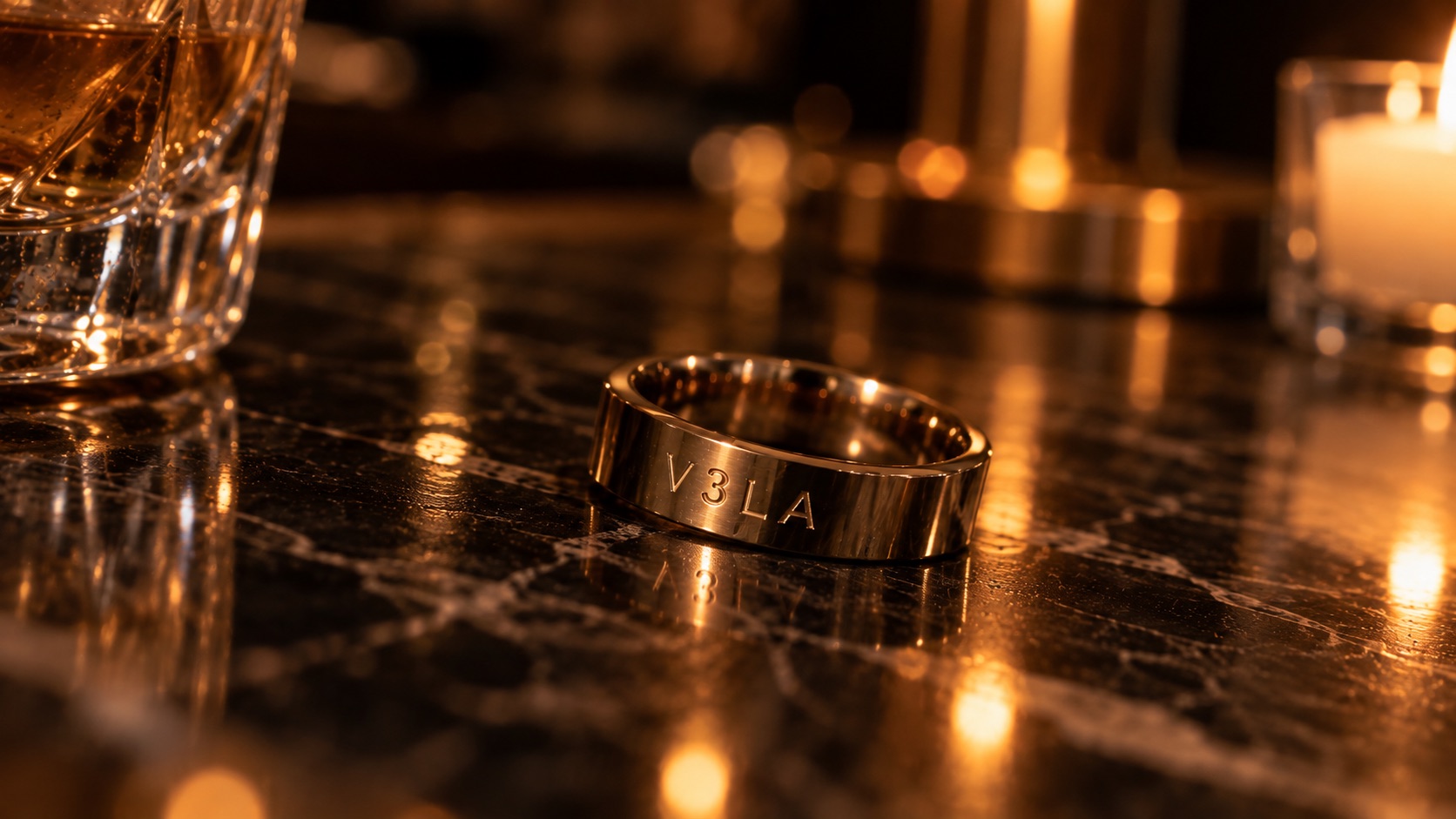
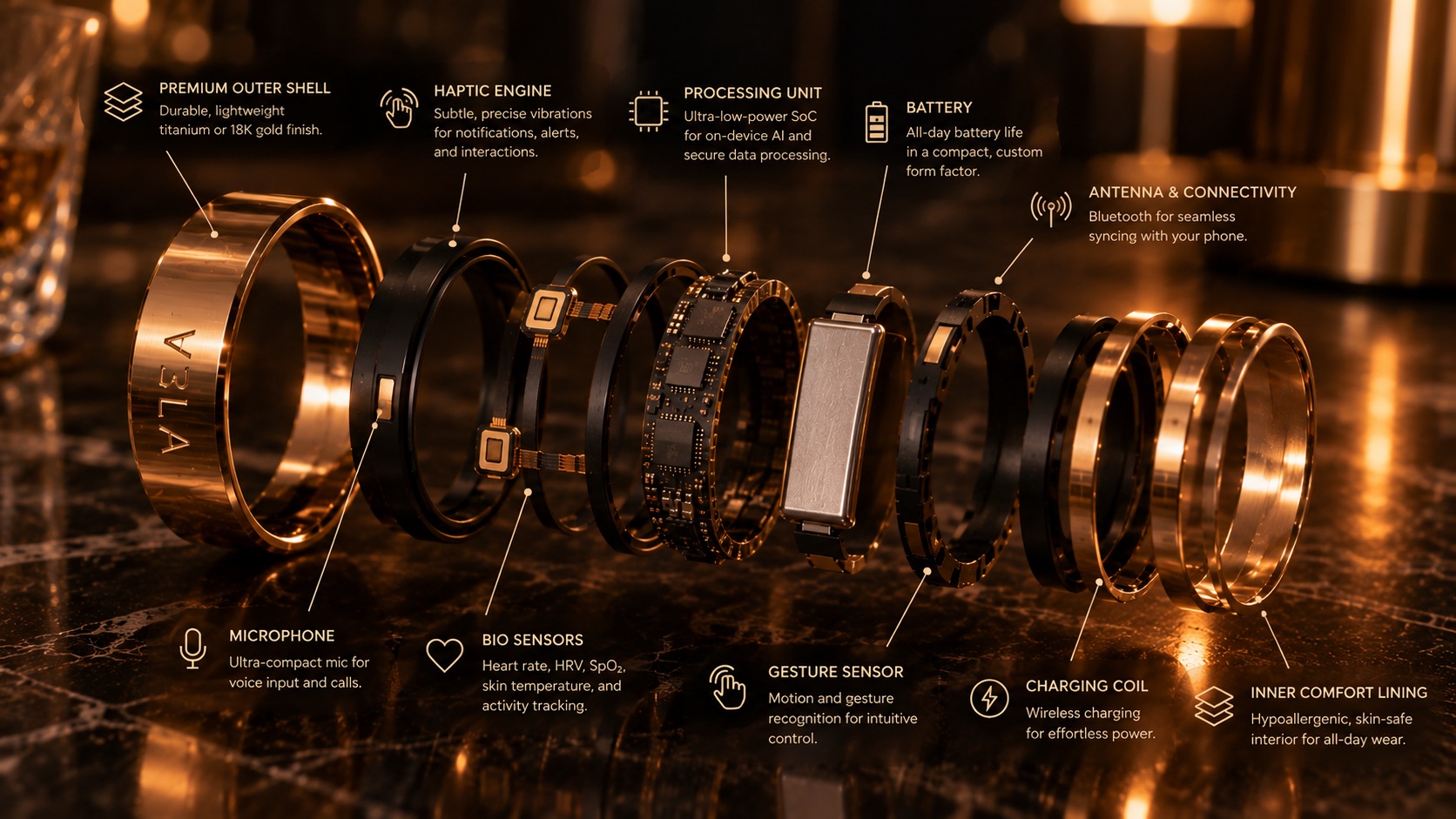
Dual thermistor plus 6-axis IMU, sampled continuously at 1 Hz. No optical PPG, no screen, no notifications on your hand — which is how it runs nine days on a charge and survives a twelve-hour shift under gloves.

Battery9 days
Mass3.1 g
Water rating5 ATM
Sampling1 Hz continuous
Tonight's plan · night 2 of 4
08:20Sleep now — anchor block, 6 h 40 m
15:00Stay dark 40 min — light now pulls the wrong way
20:30Bright light, 30 min — the one lever tonight
02:00Caffeine cut-off — protects tomorrow's block
03:10Predicted low — 90 minutes, plan around it
Software

A coach that reads your roster

Import your schedule and V3LA plans backwards from it: the anchor sleep window, the caffeine cutoff, the twenty minutes of light that move your phase in the right direction. When the roster changes at 4pm, the plan changes with it.

Phase modelTwo-process + light
LatencyOn-device, <1 s
IntegrationsHealth, Kronos, ICS
Data residencyOn-device default
02 / Science

Phase, not sleep score.

Distal skin temperature carries a clean circadian signal — its minimum tracks core body temperature minimum, the anchor point of the whole system. Estimate that, and everything else becomes arithmetic: when melatonin rises, when reaction time bottoms out, which direction light will shift you.

Modelled alertness · 24 h ·
00:0006:0012:0018:0024:00
peak window baseline impairment risk
Prescription

01

Measure

Continuous distal temperature and movement, 86,400 samples a day, no user input required.

02

Estimate

A limit-cycle oscillator fit per person converges on your temperature minimum within four days — ±19 min against lab DLMO in our pilot.

03

Prescribe

Sleep, light and caffeine timing solved against your actual roster — the shortest path from where your clock is to where the schedule needs it.

"Fatigue on a night rotation isn't a willpower problem. It's a phase problem, and phase is measurable."

Founder
V3LA
03 / Roadmap

What we're shipping, and when.

Consumer first, enterprise second, regulated third. Each stage funds the evidence base the next one needs.

V3-01
V3LA One
Temperature + IMU ring with the shift-planning app.
Consumer
Shipping Q1 2027
Preorder open
V3-02
Patch
Adhesive form factor for gloved and sterile environments.
Consumer / clinical
Prototype
2027
V3-03
Roster Engine
Fatigue-risk modelling across a whole unit, not one person.
Enterprise
Pilot
4 health systems
V3-04
Shift Recovery Rx
Clinical indication for shift work sleep disorder.
Regulated
Pre-submission
2029

V3LA One is a general wellness product. It is not intended to diagnose, treat, cure or prevent any disease, and it is not a substitute for clinical judgement. Programs marked regulated are pre-submission and are not available for sale.

04 / Team

Built by people who work the shift.

The company started on an overnight rotation, with a spreadsheet and a thermometer. Everyone we've added since has either lived the problem or spent a career measuring it.

Founder & CEO
Adrián Solís-Vance
Founded the company after living the problem firsthand, prototyping the first estimator during his own overnight rotations.
Head of Science
Dr. Sofia Reyes
Holds scientific ownership of the estimator and all published claims, including retractions.
Hardware Lead
Ravi Anand
Specialist in low-power sensing with three shipped wearable products. Responsible for thermal design.
ML Lead
Dr. Nour Haddad
Specializes in state-space models. Reduced the oscillator model's on-device runtime to under one second.
Clinical Partnerships
Marcus Delgado
Converts letters of intent into deployed units across health system partners.
Intern
Huriel Gonzalez
Recently joined the team and will lead development of the validation dataset pipeline.
05 / Careers

Small team. Unreasonable scope.

15 people, four disciplines, one hypothesis. If you want to own a whole surface instead of a ticket queue, this is that stage — and we're hiring exactly one role right now.

The one role we're hiring. Design and run the validation studies that turn our phase estimate into a defensible claim — including the DLMO comparison work. Publication is part of the job, not a side project, and the hiring process is thorough by design.

Apply for this role →

Nothing that fits? Write to us anyway — we've hired three people that way.

06 / Investors

A category the incumbents can't serve.

Every large wearable company is optimised for a diurnal user and monetised through a general-purpose subscription. Serving irregular schedules properly means a different sensor set, a different model, and a different buyer — including the health systems already paying for fatigue-related error.

$6.4M
Series A, closed
1,900
Pilot participants
74%
Day-90 retention
4
Health-system LOIs

Get in front of it.

Pilot cohorts open monthly for clinicians, night-shift teams and rotating-schedule workers. Investors and press: same form, we route it.

All contact routes →
Request access

We use your email to reply and nothing else. No list, no sharing.